
ASIATODAY.ID, ACEH – The Indonesian government has officially launched a large-scale river and estuary normalization operation across Aceh and parts of Sumatra in response to recent natural disasters, marking a major push to restore river governance, environmental resilience, and flood mitigation capacity.
President Prabowo Subianto announced the initiative while chairing a coordination and limited cabinet meeting with ministers, the military, and regional leaders in Aceh Tamiang on Thursday, January 1, 2026.
“Alright, let’s just make this a major operation. This is a big, big engineering operation. And fundamentally, I strongly agree,” Prabowo said.
River Sedimentation and Weak Watershed Governance
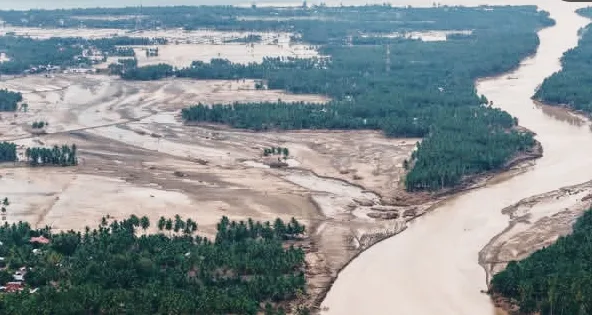
Authorities say widespread river sedimentation following the disaster has significantly reduced water capacity in multiple river systems, worsening flooding risks and disrupting post-disaster logistics. Officials note that the problem is not purely natural, but also reflects long-standing weaknesses in watershed (DAS) management.
Minister of Defense Sjafrie Sjamsoeddin, who proposed the initiative, cited the Tamiang River as a key example of natural sediment buildup exacerbated by debris and fallen timber.
“The Tamiang River, for instance, has experienced natural sedimentation. We will carry out two operations simultaneously—deepening the river and transporting heavy equipment, while also clearing timber and debris,” Sjafrie explained.
Normalization from Estuaries to Restore River Flow
The operation will prioritize river dredging (dredging works) starting from estuaries and river mouths, allowing vessels from the sea to directly access inland rivers. This approach is expected to accelerate the delivery of heavy equipment without relying on damaged land routes.
“By deepening rivers from the sea, ships can enter directly, eliminating the need to transport heavy machinery overland,” Sjafrie said.
The program will not be limited to Aceh Tamiang, but will extend to Bireuen, other coastal areas of Aceh, and Sibolga in North Sumatra.
Beyond Infrastructure: Toward Sustainable River Management
The government stressed that the operation goes beyond emergency infrastructure repair. It is also aimed at restoring the ecological function of rivers, improving long-term river governance, and preventing recurring sedimentation that contributes to annual flooding.
Officials emphasized that large-scale normalization must be accompanied by integrated watershed management, including upstream land-use control, sediment management, and ecosystem restoration.
Prabowo: Integrated River Governance is Essential
President Prabowo said the normalization of river mouths and estuaries had already received his approval following similar proposals from Aceh Governor Muzakir Manaf.
“The estuaries and river mouths will be normalized and cleared. This proposal has been submitted, and I have approved it,” Prabowo said.
He instructed the Ministry of Defense and the Indonesian National Armed Forces (TNI) to coordinate closely with provincial governments, the Ministry of Public Works, universities, and environmental engineering experts.
Involving Global Engineering and Dredging Experts
Prabowo also called for the involvement of state-owned construction firms, academic institutions, and international engineering companies with expertise in large-scale dredging and port development.
“This is large-scale engineering work—dredging. There are major companies with the expertise to handle projects of this scale,” he said.
The government hopes the Aceh–Sumatra river normalization initiative will serve as a long-term disaster mitigation strategy, strengthening environmental resilience, restoring river ecosystems, and improving sustainable water resource governance in flood-prone regions. (AT Network)
Follow Us at Google News and WA Channel