
ASIATODAY.ID, JAKARTA – The Special Task Force for Implementing Indonesian Upstream Oil and Gas Business Activities noted that national gas production had successfully reached a new production record of 7,399 million cubic feet per day (MMSCFD) which was achieved on September 4 2024, while surpassing the previous record on August 17, 2024 which is 7,212 MMSCFD.
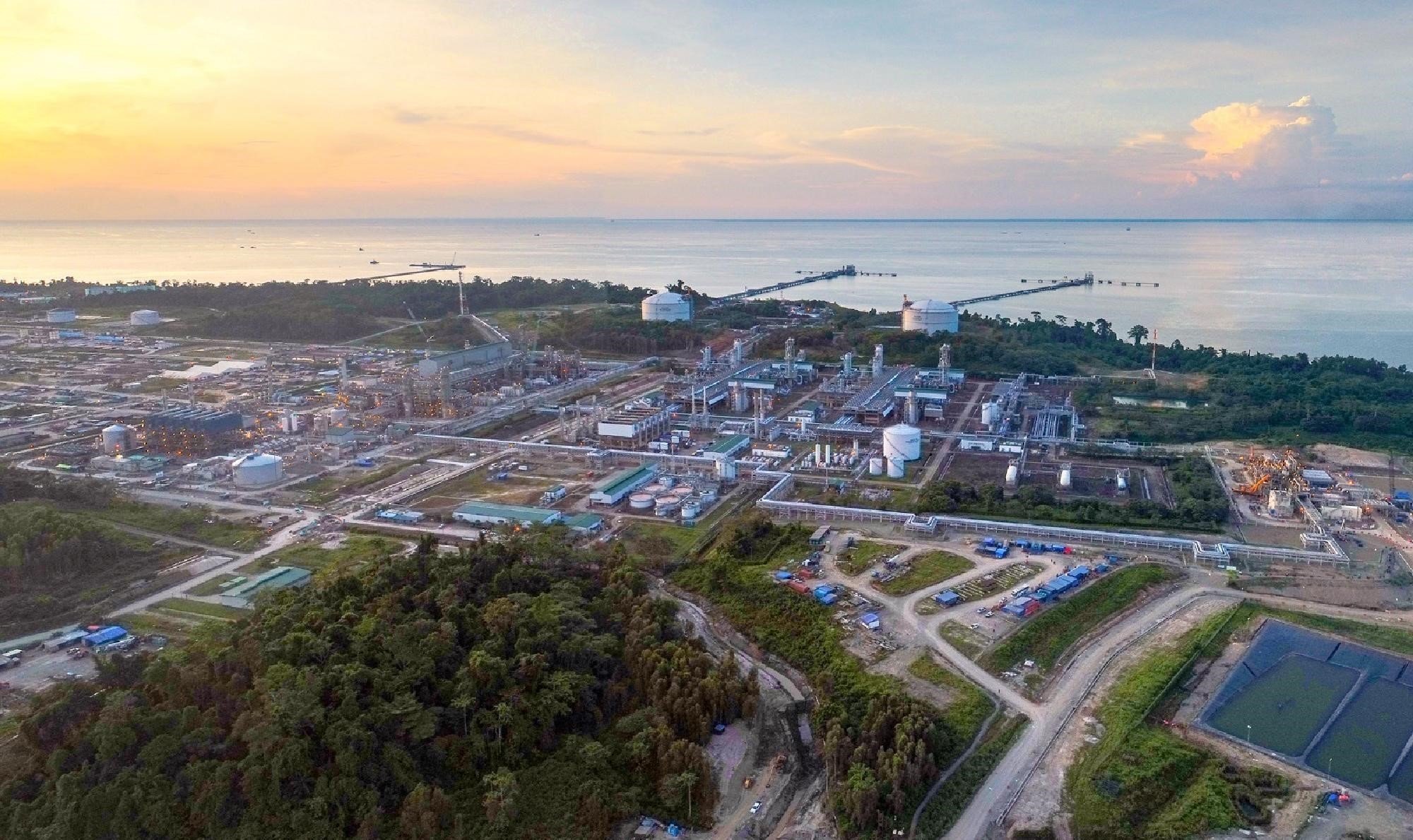
This success cannot be separated from the full operation of Tangguh LNG into three trains with an average LNG production of 2.1 billion cubic feet per day from its three liquefaction plants.
Since April 2024, Tangguh LNG has been fully operational with three trains. Since then, production has continued to increase every month and managed to record its highest production record, which was achieved on August 31 and has now succeeded in producing 1,300 m3/hour of LNG and has even reached 106% of its capacity.
This achievement cannot be separated from the success of the BP Cooperation Contract Contractor which was able to operate Tangguh LNG optimally which ultimately had a positive impact in the form of increasing national gas production. Moreover, currently BP is the largest gas producer in Indonesia.
“After the inauguration of Tangguh Train 3 by President Jokowi in November 2023, production is still not stable, but with a strong determination to continue placing work safety as a priority and optimal supervision by the Special Task Force for Upstream Oil and Gas Business Activities, we are slowly seeing “BP is able to carry out operations optimally, the impact of course is that gas production continues to increase and national gas production can reach a record high,” explained the Head of the Program and Communications Division of the Special Task Force for Upstream Oil and Gas Business Activities, Hudi D Suryodipuro, quoted Wednesday, 11 September 2024.
Hudi added that Tangguh LNG is the key to success in achieving gas production targets, because Tangguh is the number one contributor to gas production and contributes around a third of gas production nationally.
He explained that Tangguh LNG’s contribution reached more than 2.5 times the contribution of other Cooperation Contract Contractors who were below it (ranked second).
“Making sure that Tangguh LNG does not experience problems is key, because once there is a problem so that production has to be stopped, the impact on national gas production is very significant. “The Special Task Force for Upstream Oil and Gas Business Activities and BP will continue to maintain Tangguh LNG operations well as a form of our contribution to maintaining energy supplies while supporting national energy security,” explained Hudi.
Hudi hopes that all levels at Tangguh LNG can maintain their operations well and production can continue to be increased because the Tangguh field is one of the main contributors in the Government’s efforts to achieve the gas production target of reaching 12 billion cubic feet per day (BSCFD) in 2030.
He believes that the gas production target of 12 BSCFD in 2030 can be realized considering that oil and gas discoveries are currently dominated by gas discoveries and acceleration efforts that continue to be carried out by the Special Task Force for Upstream Oil and Gas Business Activities and Cooperation Contract Contractors so that every Gas discoveries can be produced immediately.
“Currently and in the future, upstream oil and gas projects will be dominated by gas projects. In 2024 alone, of the target of 15 onstream projects, 10 of them will be gas projects. “Therefore, we are confident that the gas production target of 12 BSCFD in 2030 can be realized,” said Hudi.
Currently, the trend of gas production continues to increase and the Government has approved the Makassar Strait North Hub Development Project POD which is expected to start production in 2028 with peak production producing 1,000 MMSCFD. Then the Abadi Masela block with LNG production equivalent to 1,600 MMSCFD plus 150 MMSCFD of piped gas.
Furthermore, the Government’s efforts continue to encourage the development of gas infrastructure in the country, such as the Cisem 2 gas project which connects Batang to Cirebon, as well as the Dumai gas project to Sei Mangke.
The Special Task Force for Upstream Oil and Gas Business Activities hopes that gas-using industries can continue to increase their production capacity in line with the continued increase in gas production, so that the increase in gas production can be absorbed domestically so as to produce added value and create jobs and can contribute to and in maintaining national energy security towards an advanced Indonesia in 2045. (AT Network)
Follow Us at Google News and WA Channel