

ASIATODAY.ID, JAKARTA – Indonesian International Telecommunication Company (Telin) and Singtel announced the signing of a Memorandum of Understanding to develop a new Sea Cable Communication System (SKKL) connecting Singapore and Batam. Both are part of the INSICA (Indonesia Singapore Cable System) Consortium and will build a 100 kilometer underwater fiber optic network.
Telin Chief Executive Officer, Budi Satria Dharma Purba, said that in the future, the global submarine cable market is ready for unprecedented growth, making Batam and Singapore the main locations for data center investment.
“The INSICA submarine cable will fulfill the important need for data center interconnectivity between these key strategic locations,” said Budi in a press release, Wednesday, June 5 2024.
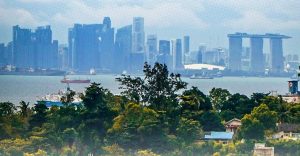
INSICA will present a submarine cable consisting of 24 fiber optic pairs and two diverse land cable lines offering a maximum capacity of up to 20 terabits per second per fiber optic pair. This will provide superior bandwidth, seamless connectivity, and strong network security while enabling efficient resource sharing and scalability.
The new multiple paths provided by INSICA will also increase network protection and reliability and ensure data centers operate 24/7 without interruption. The 100 km long INSICA cable system will support the surge in data center telecommunications traffic between Singapore and Batam and is expected to start operating in the fourth quarter of 2026.
Meanwhile, Singtel’s Vice President of Digital Infrastructure & Services, Ooi Seng Keat, said Batam emerged as the main location for data centers because of its proximity to Singapore. With this cable system, we can improve connectivity between the two countries to support intensive higher power density AI workloads from enterprises and cloud companies.
“The development of the INSICA cable system is a step we are taking in designing a hyper-connected digital ecosystem to meet long-term demand, to realize the region’s digital future and improve the regional economy,” said Ooi.
He said that Southeast Asia’s data center sector is experiencing rapid growth driven by advances in AI, cloud computing, e-commerce, IoT, edge computing and 5G. This growth has also attracted a wave of investment from established players and new entrants. Direct connectivity between data centers will also support the application of new technologies, such as the Internet of Things, robotics, AI and data analytics, which require high bandwidth and low latency for commercial scale and real-time applications.
Meanwhile, Telkom’s business in the Wholesale segment continues to increase. Telkom posted revenue of IDR 4.73 trillion, up 16.04% YoY in the first quarter of 2024. This segment experienced the highest growth at Telkom in the first quarter of 2024. Telkom’s wholesale and international business includes tower, infrastructure and data center businesses.
Alpha Consortium
In February 2024, Telkom was also involved in deploying the ALPHA submarine cable communication system (SKKL) connecting Singapore, Japan, Korea, the Philippines, Vietnam and other countries. This SKKL is targeted to operate in the first quarter of 2027.
Telkom, through PT Telekomunikasi Indonesia International (Telin), which is part of the ALPHA (Asia Link for Advanced Performance of High-Speed Access) consortium, has signed a Memorandum of Understanding (MoU) for planning and developing the SKKL.
For your information, Telkom is trying to capture opportunities for data traffic which is currently concentrated from the United States & Europe to the Asia-Pacific region. Compound Annual Growth Rate (CAGR) growth in mobile traffic in this area is projected at 10-25% in data center capacity in Malaysia, Indonesia and India in the next five years.
So far, there are 38 SKKLs in Singapore, making it the busiest hub in the world compared to Egypt, Marseille and Tokyo. Through this collaboration, seven new SKKLs called ICE (Indonesia Cable Express) will make Indonesian waters a hub for SKKLs.
Telin’s participation in the ALPHA consortium will provide benefits for the development of digital infrastructure and connect more people around the world in the future. The ALPHA cable itself has at least eight fiber pairs with a speed of 18 Tbps (terabits per second) per fiber pair which allows smooth and high capacity data transmission in the East Asia and Southeast Asia regions.
Meanwhile, KT Corporation Senior Vice President Jehoon Myung stated that the construction of the ALPHA cable by KT serves as a major stepping stone that can quickly address the rapidly increasing demand for cloud traffic, big data and AI in the fast-growing Asia region for enterprise customers.
The ALPHA consortium is targeted to start running in the third quarter of 2024, with a contract in 2024, and will continue procedures for selecting turn-key suppliers and other preparations. The ALPHA cable system is expected to be ready to operate in the first quarter of 2027. (AT Network)
Follow Us at Google News and WA Channel