
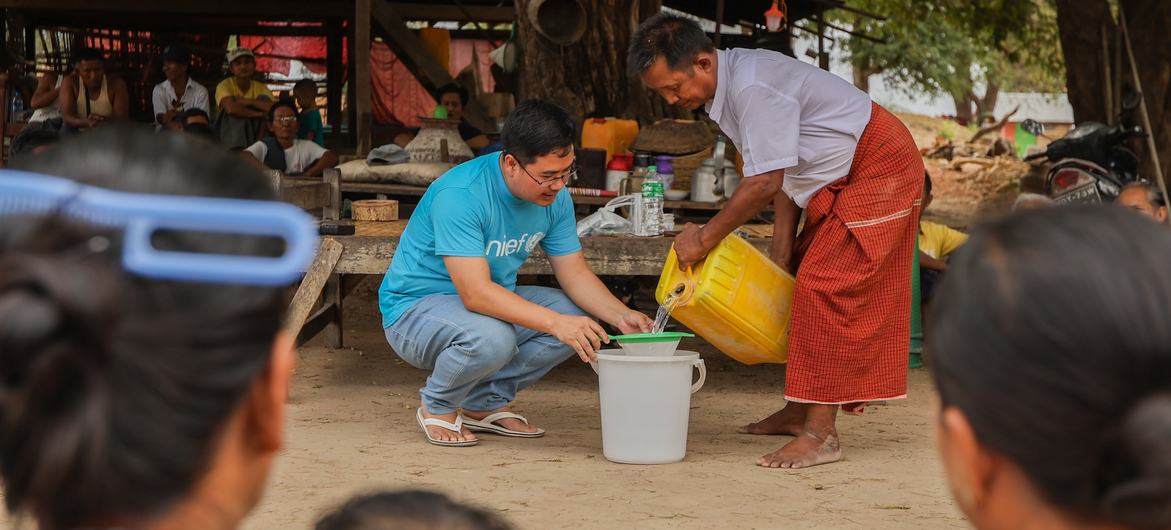
ASIATODAY.ID, NAYPYIDAW – Thousands of families in Myanmar remain without shelter, water or medical care three weeks after deadly earthquakes struck the country, as frequent aftershocks compound the suffering of communities already battered by conflict and poverty.
The earthquakes – which hit central Myanmar on 28 March – killed at least 3,700 people, injured 4,800 more and left 129 still missing. However, humanitarians warn the true toll is likely much higher due to underreporting and continued challenges in data collection and verification.
More than 140 aftershocks – some as high as magnitude 5.9 – have rocked the region since the initial tremors, exacerbating the psychological toll, particularly on children and displaced families, according to a bulletin issued by the UN Office for the Coordination of Humanitarian Affairs (OCHA) on Friday.
“Frequent strong aftershocks continue to shake central Myanmar almost daily, increasing fear and uncertainty,” the Office said, adding that many families still sleep outdoors, exposed to the elements and the risk of disease and venomous insect and snake bites, Apri 18, 2025.
There are fears that the aftershocks may persist for months following such a major earthquake, given that Myanmar is in a highly tectonically active region, OCHA added.
Basic needs unmet
More than 4.3 million people urgently need clean water and sanitation, as the earthquakes severely damaged water systems, collapsed over 42,000 latrines and caused widespread power outages that have halted water pumping in many areas.
Damage to water systems has forced residents to rely on unsafe sources, heightening the risk of waterborne illnesses. Malnutrition is also a growing concern – particularly among children – as food insecurity worsens and nutrition support becomes harder to deliver.
Education infrastructure has also been hard hit. With the new school year set to begin in June, hundreds of damaged classrooms must be cleared, repaired or rebuilt, and clean water, toilets and basic hygiene facilities restored before students can safely return.
The earthquakes struck during Myanmar’s dry season, in one of the country’s most important agricultural belts. The hardest-hit regions are responsible for a third of the country’s cereal production and four-fifths of its maize output.
Damage to farmland and supporting infrastructure now threatens food production just as the monsoon planting season approaches.
“Livelihoods have been upended due to widespread damage to farmland, essential infrastructure and other income-generating businesses,” OCHA said.
Humanitarian response under pressure
Despite difficult conditions, humanitarian agencies and local responders have reached over 240,000 people with food, medical supplies and essential items, as of 18 April.
Over 100 tonnes of medical supplies have been delivered, and mobile health teams are providing trauma care and psychosocial support in the hardest-hit areas.
Despite these efforts, the scale and urgency of the disaster demand far greater action, resources and access, OCHA said.
Alongside partners, the United Nations launched a $275 million appeal last week to reach an additional 1.1 million with urgent aid.
This request is on top of the $1.1 billion humanitarian response plan launched in December 2024 to help 5.5 million of the most vulnerable people suffering the effects of conflict and long-standing hardship. (UN News)
Follow Us at Google News and WA Channel