
ASIATODAY.ID, JAKARTA — The world is entering an era of extreme urbanization.
A new UN report reveals that 45 percent of the planet’s 8.2 billion people now live in cities, a proportion that will continue to surge as global development accelerates.
According to the World Urbanization Prospects 2025: Summary of Results, released by the UN Department of Economic and Social Affairs (UNDESA), this rapid demographic shift is not merely a population trend—it is a “defining force of our time” with major implications for sustainable development, economic growth, and global climate action.
Urbanization: A Global Force Reshaping the Future
As nations negotiate climate commitments at COP30 in Belém, Brazil, the report underscores how cities have become central to the world’s economic and environmental future.
“Urbanization is a defining force of our era. When managed inclusively and strategically, it can open transformative pathways for climate action, economic growth, and social equity,” said Li Junhua, UNDESA’s Under-Secretary-General, November 18, 2025.
He emphasized the need for integrated national policies connecting housing, land use, mobility, and public services across both urban and rural regions.
Megacities Surge: Jakarta Now the World’s Largest City
The report highlights a dramatic fourfold increase in megacities since 1975, rising from just eight to 33 megacities in 2025—with 19 located in Asia.
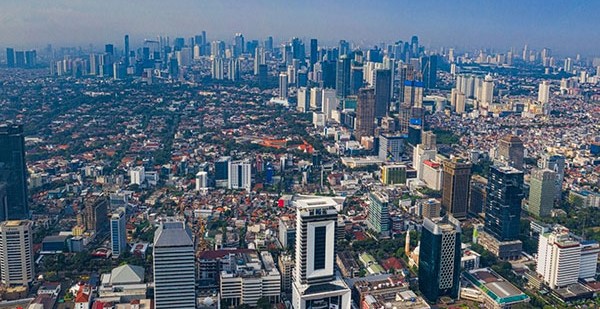
Indonesia’s capital, Jakarta, tops the global list with nearly 42 million residents. It is followed by:
Dhaka, Bangladesh – nearly 40 million
Tokyo, Japan – 33 million
Cairo is the only non-Asian city to enter the global top 10.
The number of megacities is expected to expand to 37 by 2050, with Addis Ababa (Ethiopia), Dar es Salaam (Tanzania), Hajipur (India), and Kuala Lumpur (Malaysia) projected to cross the 10-million threshold.
Small and Medium Cities: Quiet Growth Engines
Despite the spotlight on megacities, the fastest growth is occurring in small and medium-sized cities, particularly in Africa and Asia.
From an analysis of 12,000 cities worldwide:
96% have fewer than 1 million residents
81% have fewer than 250,000 residents
The total number of cities has more than doubled since 1975
By 2050, the global city count may surpass 15,000, driven largely by smaller urban centers.
Diverging Urban Trajectories: Some Cities Shrink, Others Boom
The report identifies a striking dual trend: some cities are shrinking even as their countries grow, while others expand despite national population decline.
Most shrinking cities have fewer than 250,000 residents. Over one-third are located in China, while India accounts for 17 percent. Notably, Mexico City and Chengdu are among major urban centers experiencing population drops.
Towns and Rural Areas: A Rapidly Changing Landscape
Towns—defined as settlements of at least 5,000 inhabitants—remain the most common settlement type in more than 70 countries, including Germany, India, Uganda, and the United States.
Rural regions, however, are rapidly diminishing. In 1975, rural areas dominated in 116 countries; today, that number has fallen to 62. By 2050, it is projected to drop further to just 44.
The exception is sub-Saharan Africa, which remains the only region expected to see continued rural population growth and will account for nearly all such growth in the future. (AT Network)
Follow Us at Google News and WA Channel