
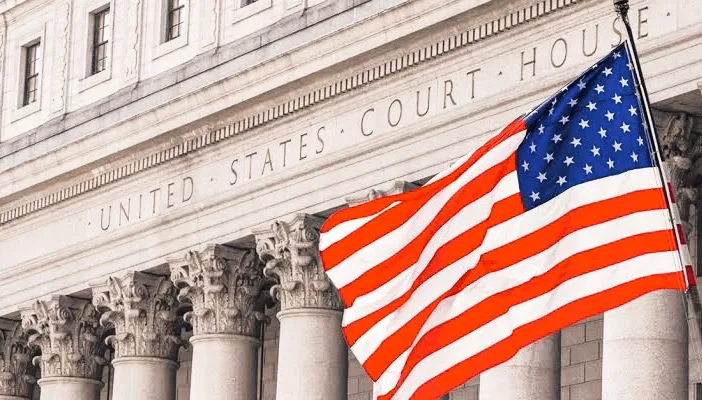
ASIATODAY.ID, JAKARTA — A federal court in California has ruled to continue the lawsuit filed by four Indonesian migrant fishers against Bumble Bee Foods (BBF), one of the largest seafood companies in the United States.
The decision blocks BBF’s attempt to dismiss the case and marks a major breakthrough in holding global seafood corporations accountable for forced labor and human trafficking in their supply chains.
The lawsuit, filed on 12 March 2025, alleges that BBF sourced tuna from vessels involved in forced labor practices and trafficking in persons (TIP). The four plaintiffs—Akhmad, Angga, Muhammad Sahrudin, and Muhammad Syafi’i—brought the case under the Trafficking Victims Protection Reauthorization Act (TVPRA), a federal law that provides a private right of action for survivors of labor exploitation and human rights abuses.
The court determined that the evidence and allegations presented by the plaintiffs were “sufficient and credible,” allowing the case to move forward. This ruling makes the lawsuit one of the few TVPRA supply-chain cases in the fisheries sector to successfully surpass the motion to dismiss stage.
A Critical First Step Toward Justice
Muhammad Syafi’i, one of the plaintiffs, expressed deep relief and emotion following the decision.
“This gives us hope. I felt like crying because the court finally listened to our voices,” he said quoted on November 21, 2025.
The lawsuit has gained strong support from Greenpeace International, Greenpeace Indonesia, and the Indonesian Migrant Workers Union (SBMI). Evidence gathered from Greenpeace International’s Beyond Seafood supply-chain investigations played a crucial role in supporting the complaint, revealing patterns of abuse and exploitation on tuna vessels linked to BBF’s supply chain.
Court: BBF Likely Knew About Forced Labor in Its Supply Chain
The court’s reasoning emphasized that BBF knew or should have known about widespread forced labor on the tuna vessels supplying its products. The ruling also stated that BBF failed to implement proper safeguards, training, or oversight to prevent labor abuses at sea.
BBF actively sourced albacore tuna (Thunnus alalunga) from multiple vessels and processed it for commercial gain, despite indicators of potential exploitation.
Greenpeace: A Landmark Moment for Global Fisheries Reform
Fildza Nabila Avianti, Oceans Campaigner at Greenpeace Indonesia, called the ruling a “critical early victory” and a turning point for accountability in the global seafood industry.
“Companies like BBF cannot continue prioritizing profits while ignoring exploitation at sea. They must address the root causes of modern slavery,” she said.
Sari Heidenreich, Senior Human Rights Adviser at Greenpeace USA, described the ruling as monumental:
“This is not just a win for four Indonesian fishers. It is a global signal that seafood companies must ensure their products are free from forced labor and modern slavery.”
SBMI: These Four Fishers Represent Thousands of Silent Victims
SBMI Chairperson Hariyanto Suwarno criticized BBF’s attempt to dismiss the lawsuit, calling it a continued pattern of corporate impunity.
“These four plaintiffs symbolize thousands of Indonesian migrant fishers who have endured forced labor, isolation at sea, unpaid wages, and violence,” he said.
Hariyanto stressed that the legal battle is far from over, but the ruling provides new hope for long-term justice for migrant fishers worldwide.
Greenpeace Urges Systemic Reform: Wi-Fi Access, 3-Month Limits, and Full Monitoring
Greenpeace’s global Beyond Seafood campaign is pushing for comprehensive industry reforms, including:
1. Free and safe Wi-Fi access on all fishing vessels
To enable fishers to communicate with families, unions, and authorities.
2. A maximum sea deployment of 3 months
To reduce risks of forced labor, trafficking, and human rights violations.
3. 100% human or electronic monitoring
To ensure independent and transparent reporting of fishing practices, bycatch, and interactions with protected species.
Arifsyah Nasution, Project Lead for Beyond Seafood at Greenpeace Southeast Asia, said the ruling is a stark warning to the global fishing industry:
“Exploitation at sea can bring your company to court—even in foreign jurisdictions.”
Global Context: Forced Labor Still Rampant at Sea
According to the International Labour Organization (ILO), at least 128,000 fishers worldwide are trapped in forced labor. Such abuses are closely tied to illegal, unreported, and unregulated fishing (IUUF), which deepens the ocean crisis and pushes vessels farther offshore for longer periods, creating ideal conditions for exploitation.
BBF, with annual revenues surpassing US$1 billion, is owned by Fong Chun Formosa (FCF), a vertically integrated Taiwanese tuna giant that controls significant segments of the global tuna supply chain.
The US court’s decision to allow the Indonesian fishermen’s lawsuit against Bumble Bee Foods to proceed represents a major milestone in uncovering and confronting forced labor in global fisheries. It delivers a powerful message: multinational seafood corporations can no longer hide behind complex supply chains to avoid accountability.
The case now moves into its next phase—one that could reshape labor standards and corporate responsibility across the global seafood industry. (AT Network)
Follow Us at Google News and WA Channel