
ASIATODAY.ID, CARACAS – The dramatic capture of Venezuelan President Nicolás Maduro by US special forces has shaken global diplomacy and reignited attention on one of the world’s worst humanitarian crises.
For the United Nations, the mission remains unchanged: protect lives, sustain essential services, and support Venezuelans at home and abroad — even as political chaos unfolds.
Crisis Background
Venezuela has suffered years of economic collapse, political turmoil, hyperinflation, and US sanctions, compounded by floods, landslides, and other climate disasters.
The US military operation that seized Maduro has injected a new wave of uncertainty into an already fragile nation.
According to the UN Office for the Coordination of Humanitarian Affairs (OCHA), 7.9 million people — more than a quarter of the population — now require urgent assistance.
A Vast UN Presence
Despite the turmoil, the UN maintains an extensive operational footprint across Venezuela:
– Agencies such as WFP, WHO, and UNFPA continue to deliver food, health care, maternal services, clean water, and nutrition screening.
– UN work spans food security, education, gender equality, peacebuilding, and sanitation.
– Following the latest developments, the UN country team said it is closely monitoring the situation and prepared to scale up humanitarian operations if necessary.
Human Rights Under the Microscope
The political upheaval has further exposed Venezuela’s long-standing human rights violations.
The Office of the High Commissioner for Human Rights (OHCHR) continues to document abuses.
UN rights chief Volker Türk has warned of deepening repression, citing militarization, threats to journalists and activists, arbitrary detentions, and enforced disappearances.
UN investigators emphasize that justice for extrajudicial killings, torture, and sexual violence must not be overshadowed by current events.
A Continuing Exodus
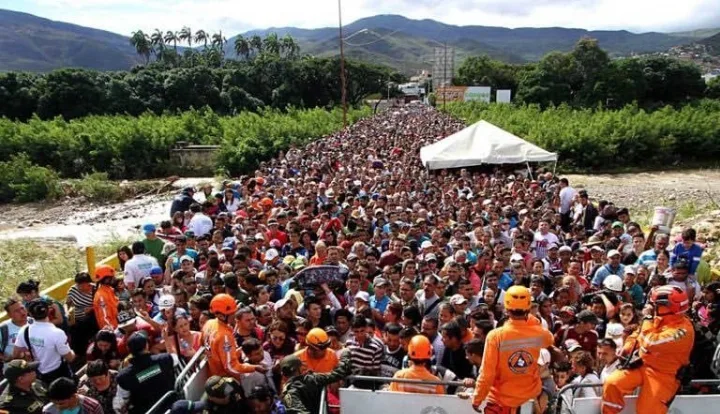
Over the past decade, millions have fled economic collapse and political persecution.
Nearly half of Venezuelan migrants rely on informal, low-paid jobs; 42% struggle to buy enough food, and 23% live in overcrowded housing.
Whether the US operation will trigger another wave of displacement remains unclear — but humanitarian agencies are bracing for impact.
Regional Response
The UNHCR and IOM lead a regional coordination plan spanning 17 countries across Latin America and the Caribbean.
So far, the initiative has helped 4.5 million Venezuelans obtain legal status, documentation, and access to basic services.
The latest Regional Refugee and Migrant Response Plan (RMRP) seeks US$1.4 billion to assist 2.3 million people with jobs, education, health, and protection.
Funding Crunch
Despite global pledges of solidarity, funding for Venezuela’s Humanitarian Response Plan remains perilously low.
In 2025, only 17% of the US$600 million needed was received.
UN officials warn that lifesaving programs could face severe cuts at the very moment they are most needed.
Bottom Line
While political headlines dominate the world’s attention, for the UN, the mission is constant and clear:
Keep aid flowing, defend human rights, and stand by the Venezuelan people — inside the country and across its borders — amid a crisis with far-reaching global consequences. (AT Network)
Follow Us at Google News and WA Channel