
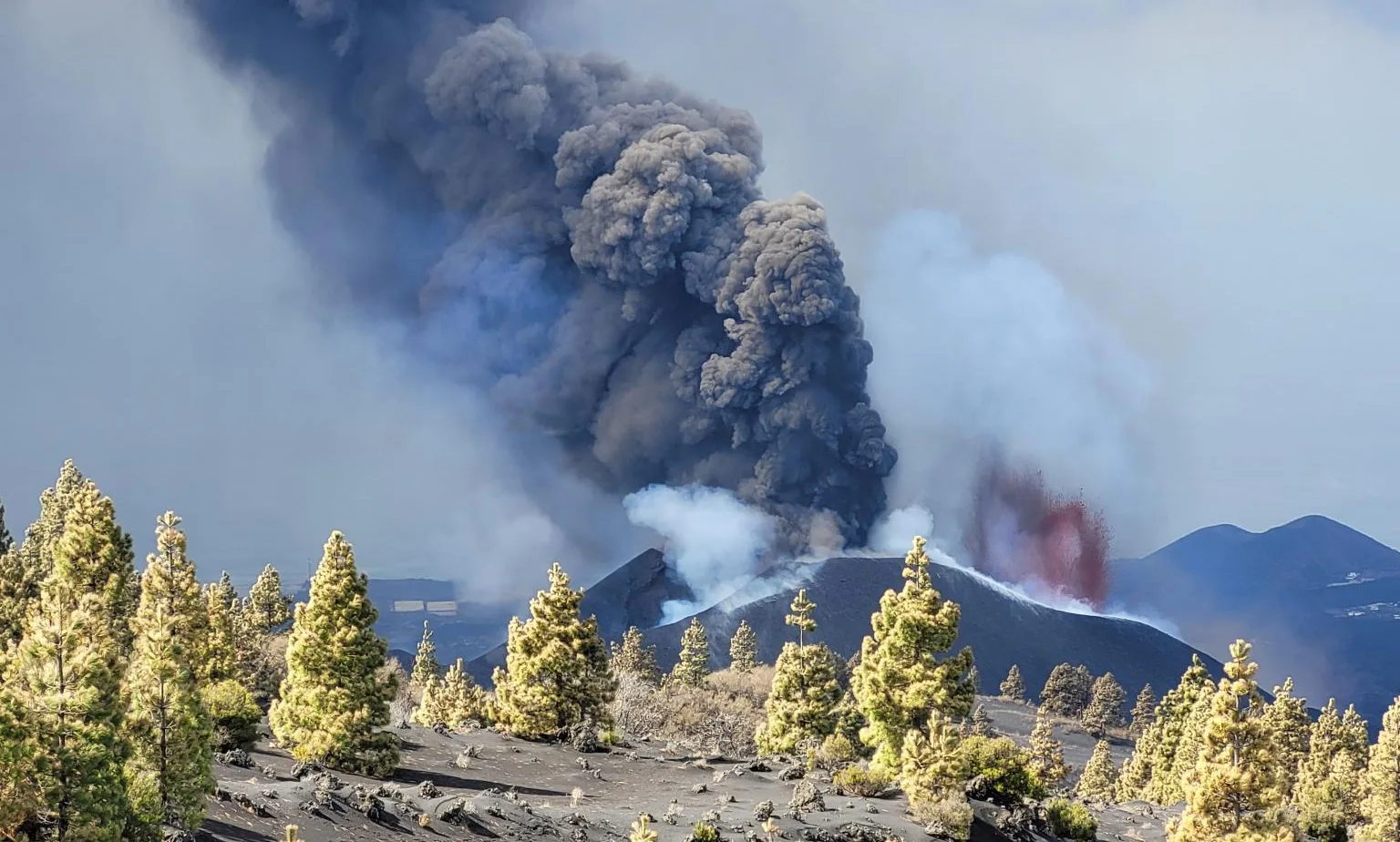
ASIATODAY.ID, GENEVA — Volcanic eruptions are not merely local disasters. They can ground international aviation, disrupt global food systems, overwhelm public health services, damage critical infrastructure, and even alter the Earth’s climate.
Yet despite their far-reaching consequences, volcanic hazards continue to receive far less attention than other natural threats in global early warning systems.
This stark imbalance was a central theme at the international workshop “Advancing Volcanic Hazards in Early Warnings for All”, held at the headquarters of the World Meteorological Organization (WMO) in Geneva from 7 to 9 July ago.
Participants warned that without stronger integration of volcanology into disaster risk governance, millions of people living near active volcanoes will remain dangerously exposed.
Volcanoes: A Complex and Global Hazard
Volcanic eruptions generate a wide range of interconnected hazards. Primary threats—including pyroclastic density currents, lava flows, ashfall, and toxic gas emissions—can devastate cities and rural communities within hours.
Secondary hazards such as lahars, tsunamis, and wind-driven ash remobilization often extend impacts far beyond eruption zones.
The consequences are not confined to national borders. Large explosive eruptions can influence global climate systems by injecting sulfur dioxide and fine ash particles into the stratosphere, where they reflect solar radiation and cool the Earth’s surface for months or even years.
Despite these risks, volcanic monitoring infrastructure remains fragile in many parts of the world, particularly in Small Island Developing States and least-developed countries. Limited investment, unclear institutional mandates, and gaps in risk knowledge continue to undermine preparedness.
Science, Governments, and Communities Saving Lives
The workshop also highlighted success stories where collaboration between scientists, governments, and local communities has proven lifesaving.
A key driver of this progress is the World Organization of Volcano Observatories (WOVO), operating under the International Association of Volcanology and Chemistry of the Earth’s Interior (IAVCEI).
WOVO facilitates global data exchange, peer support, and technical cooperation among volcano observatories, strengthening collective capacity to anticipate and respond to eruptions.
More than 100 experts from the United Nations system, international organizations, regional disaster authorities, and civil society reviewed challenges and opportunities to integrate volcanic hazards into the four pillars of the Early Warnings for All initiative.
Four Pillars—and Persistent Gaps
1. Risk Knowledge
Significant progress has been made through expanded global databases such as WOVOdat, retrospective analyses of historical eruptions, and improved hazard assessments.
However, many volcanoes remain poorly characterized due to limited field access, insufficient instrumentation, and outdated studies.
The workshop emphasized: AI-assisted hazard and risk modelling, Systematic global data collection, Co-production of knowledge with communities living near active volcanoes.
2. Monitoring and Forecasting
Volcano monitoring is increasingly integrated into meteorological frameworks using seismic, geodetic, thermal, and gas-emission data. Yet coverage remains uneven. Equipment losses, funding constraints, and shortages of skilled personnel continue to hamper observatories.
Participants called for regional cooperation, shared information platforms, expanded use of Earth observation data, and real-time AI-enhanced forecasting.
3. Warning Dissemination
Advances in mobile connectivity and the Common Alerting Protocol (CAP) have improved the speed of public warnings. Still, nearly one-third of the world’s population lacks access to effective early warning systems.
Fragmented institutional mandates, exclusion of vulnerable communities, and low public trust undermine warning effectiveness. Inclusive, multi-channel communication—led by designated national authorities—was identified as essential.
4. Preparedness and Response
Examples from Ecuador, the Philippines, and St. Vincent and the Grenadines demonstrated how predefined alert thresholds, anticipatory action protocols, and regular drills can save lives.
However, many regions continue to struggle with insufficient resources, unclear legal responsibilities, and the complexities of large-scale evacuations, compounded by socioeconomic vulnerabilities.
Clear Recommendations: Volcanology Must Be Elevated
The WMO–IAVCEI workshop issued a set of strategic recommendations:
– Strengthen volcanic risk knowledge through systematic hazard assessments and probabilistic modelling
– Expand monitoring capacity in high-risk regions using multiparameter networks and Earth observation tools
– Scale up inclusive warning dissemination by adopting CAP globally across volcano observatories
– Embed volcanic hazards within multi-hazard early warning frameworks
– Promote anticipatory action by integrating volcanic risk into national protocols and securing sustainable financing
– Strengthen volcanology’s representation within the United Nations system to enhance visibility, policy support, and funding.
No More Blind Spots Under the Shadow of Volcanoes
The Geneva workshop marked a milestone in cross-sector collaboration. Volcanology experts reaffirmed their commitment to supporting Early Warnings for All roadmaps, contributing to communities of practice on AI, CAP, and GDACS (Global Disaster Alert and Coordination System), and strengthening coordination through IAVCEI and WOVO.
The message was unequivocal: without robust volcanic early warning systems, disaster risk reduction efforts remain incomplete.
Aligning scientific progress with global governance is essential to ensure that communities living in the shadow of volcanoes are no longer overlooked—and that lives, livelihoods, and development gains are protected worldwide. (AT Network)
Follow Us at Google News and WA Channel