
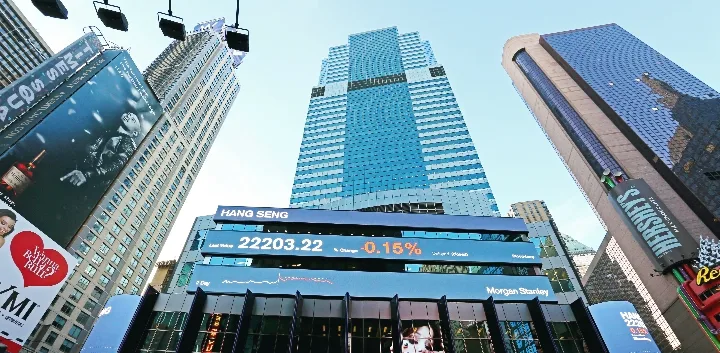
ASIATODAY.ID, JAKARTA — Morgan Stanley Capital International (MSCI) has rattled Indonesia’s equity market after announcing a temporary freeze on several index treatments for Indonesian stocks, citing persistent concerns over ownership transparency, free float reliability, and potential coordinated trading behavior.
The decision has put Indonesia’s Emerging Market status under close scrutiny, pushing the country’s financial regulator, the Financial Services Authority (OJK), to accelerate reforms aimed at meeting global investment standards and restoring investor confidence.
Why Morgan Stanley Stepped In
According to MSCI, consultations on Indonesia’s free float assessment revealed structural weaknesses despite minor improvements in data provided by the Indonesia Stock Exchange (IDX).
Global investors remain uneasy about opaque shareholding structures, limited visibility into controlling interests, and the risk that concentrated ownership could distort price formation.
MSCI stressed that more granular and reliable ownership disclosures, including monitoring of high ownership concentration, are essential to ensure accurate free float calculations and assess the true investability of Indonesian equities.
The Temporary Freeze Explained
To manage these risks, MSCI introduced temporary measures affecting Indonesian securities:
– A freeze on increases to Foreign Inclusion Factors (FIF) and Number of Shares (NOS).
– A halt on new additions to the MSCI Investable Market Index (IMI).
– A suspension of upward migration across index size segments, including from Small Cap to Standard Index.
“These measures are designed to reduce index turnover and investability risks, while giving market authorities time to deliver meaningful transparency improvements,” MSCI said.
Indonesia’s Regulatory Response
In response, OJK Chairman Mahendra Siregar reaffirmed Indonesia’s commitment to align its capital market framework with international best practices.
Since early January 2026, the IDX has begun publishing expanded share ownership data, including holdings above and below the 5% threshold, categorized by investor type. The move directly addresses Morgan Stanley’s concerns over limited ownership transparency.
“We are committed to implementing all necessary adjustments in line with international best practices,” Mahendra said at a press briefing at the IDX.
OJK also pledged to comply with additional MSCI requirements, including deeper disclosure of sub-5% holdings, clearer ownership structures, and enhanced data quality to support more credible free float assessments.
Free Float Rules and Beneficial Ownership
Capital market Self-Regulatory Organizations (SROs) will introduce a minimum free float requirement of 15%, backed by stricter enforcement.
Companies failing to meet the threshold within the prescribed timeframe may face an exit policy, including potential delisting.
OJK will also require disclosure of Ultimate Beneficial Owner (UBO) data for listed companies to MSCI—placing Indonesia closer to transparency standards applied in major global markets.
What’s at Stake
MSCI warned that if insufficient progress is made by May 2026, it will reassess Indonesia’s market accessibility status. Possible outcomes include:
– A reduction in Indonesia’s weighting within the MSCI Emerging Markets Index, or
– A potential reclassification from Emerging Market to Frontier Market.
Despite the warning, OJK said MSCI’s engagement signals that Indonesia remains attractive and investable for global investors, provided reforms are delivered on time and in full.
Stabilising the Market
Amid heightened volatility in the Jakarta Composite Index (JCI), OJK and the IDX said they are ready to deploy stabilisation tools, including share buybacks without shareholder approval, trading halts, and adjustments to lower auto-rejection limits, while closely monitoring global and domestic risks.
As pressure from Morgan Stanley and MSCI mounts, Indonesia’s response over the coming months will be critical—not only for short-term market stability, but for its long-term standing in the global investment universe. (AT Network)
Follow Us at Google News and WA Channel