
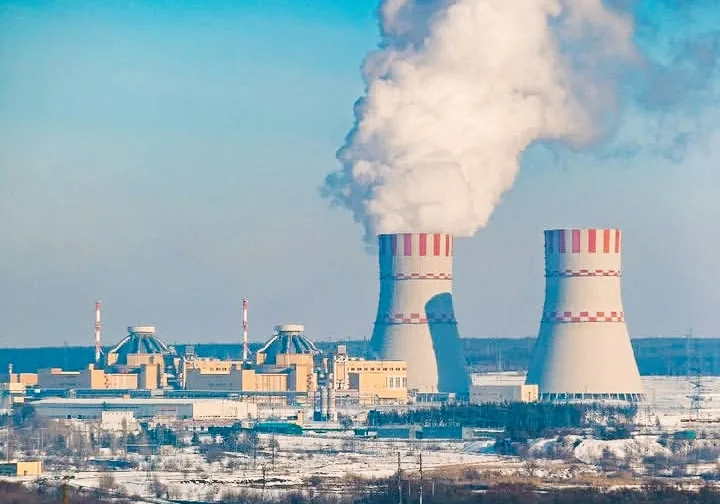
ASIATODAY.ID, YOGYAKARTA — Indonesia’s ambition to develop nuclear power plants (NPPs) is neither new nor experimental. Since the early days of independence, the country’s first president, Soekarno, placed strong emphasis on mastering strategic science and technology, including nuclear and aerospace development.
This vision materialized through the establishment of the National Atomic Energy Agency (BATAN) and the National Institute of Aeronautics and Space (LAPAN), both reinforced by national legislation.
Today, as the global climate crisis accelerates and the energy transition becomes unavoidable, nuclear power is re-emerging as a rational, science-based solution.
“Nuclear energy is among the safest and lowest-carbon energy sources, comparable to — and in many cases more stable than — other renewable energies,” said Anhar Riza Antariksawan, researcher and lecturer at the Indonesian Polytechnic of Nuclear Technology, National Research and Innovation Agency (BRIN), during the Capacity Building Awareness on Nuclear Energy 2026 on Thursday, January 22, 2026.
According to Anhar, nuclear energy is increasingly positioned as a strategic component of the national energy mix to support renewable energy targets.
One key innovation being introduced is the nuclear–renewable hybrid energy system, which integrates nuclear power plants with renewable sources to ensure grid reliability while simultaneously supporting industrial demand, clean water production, and synthetic fuel development.
In his presentation titled Nuclear Technology and Safety, Anhar emphasized that nuclear power is no longer an experimental technology. More than 30 countries currently operate hundreds of nuclear power units worldwide, and new plants continue to be built through 2025—particularly in Asia, with China leading global expansion.
“In Africa, South Africa already operates nuclear power plants. Egypt is nearing completion of its nuclear project, and other countries such as Ghana and Ethiopia have shown strong commitment to entering the nuclear era,” he explained.
Anhar also outlined the long technological evolution of nuclear reactors—from first-generation experimental reactors, to second-generation designs that form the backbone of today’s commercial nuclear industry, and third-generation reactors equipped with significantly enhanced safety and efficiency systems.
“Currently, fourth-generation reactor designs are under development in several countries, featuring revolutionary concepts that prioritize high efficiency and superior safety performance,” he added.
Addressing public concerns, Anhar stressed that safety remains the most fundamental pillar of modern nuclear technology. Nuclear safety is governed by three core principles: Safety, Security, and Safeguards (3S).
“Safety refers to preventing accidents during operation, security ensures that nuclear materials are protected from unauthorized access, and safeguards guarantee that all nuclear materials are fully accounted for and monitored,” he explained.
Indonesia, he noted, is bound by international safeguards agreements, under which all nuclear materials are subject to regular inspection by the International Atomic Energy Agency (IAEA).
The Fukushima Daiichi accident in 2011, Anhar said, became a critical global lesson that strengthened nuclear safety standards—particularly through the development of passive safety systems capable of maintaining reactor cooling without external power for extended periods.
The event also featured prominent speakers including Rony Seto Wibowo, Professor of Power System Optimization at Institut Teknologi Sepuluh Nopember (ITS); Heru Sriwidodo, consultant and author; and Haendra Subekti, Deputy for Nuclear Safety Assessment at Indonesia’s Nuclear Energy Regulatory Agency (BAPETEN).
The Capacity Building Awareness on Nuclear Energy 2026 program was jointly organized by Institut Teknologi PLN and Institut Teknologi Sepuluh Nopember (ITS), aiming to build a comprehensive, data-driven, and science-based understanding to support long-term, sustainable national energy policy. (AT Network)
Follow Us at Google News and WA Channel