
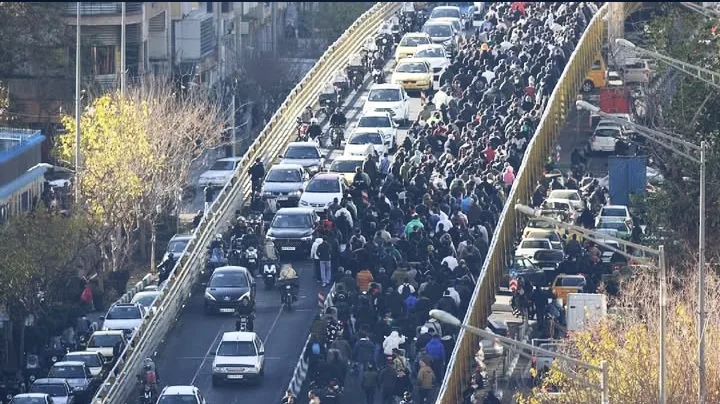
ASIATODAY.ID, TEHRAN – Protests across Iran have entered a ninth consecutive day, driven by deepening economic hardship and a sharp rise in living costs, prompting the United Nations to warn of the risk of further bloodshed amid reports of fatalities, mass arrests, and escalating tensions between demonstrators and security forces.
UN Secretary-General António Guterres said he was “deeply saddened” by reports of deaths and injuries resulting from clashes during demonstrations in Tehran and other cities. His concerns were conveyed by UN Spokesperson Stéphane Dujarric during a press briefing at UN Headquarters in New York on Monday.
“The Secretary-General underscores the urgent need to prevent any further loss of life and calls on authorities to uphold the rights to freedom of expression, association, and peaceful assembly,” Dujarric said on January 5, 2026.
Deaths, Arrests, and Widening Protests
Human rights groups report that at least 20 people have been killed, including three children, while hundreds of protesters have been arrested, some of them minors.
Videos circulating on social media show large demonstrations in Tehran and the southwestern city of Yasuj, with protests reported last week in the majority of Iran’s provinces.
The UN also urged all actors in Iran and the wider region to exercise restraint and avoid actions that could further inflame tensions or undermine regional stability.
U.S. Warning and Tehran’s Response
Tensions rose further after U.S. President Donald Trump warned that Washington would “come to the rescue” of protesters if Iranian authorities continued to authorize the use of lethal force.
In response, Iran submitted formal letters to the UN Secretary-General and the UN Security Council, calling on them to condemn what Tehran described as unlawful threats against Iranian sovereignty.
Iranian Government Distinguishes Protesters from Rioters
Inside Iran, senior officials have sought to draw a clear line between legitimate protesters and groups accused of attempting to exploit public demonstrations to create unrest.
First Vice President Mohammad Aref said citizens participating in protests had clearly distanced themselves from “chaos-makers.”
He announced that a government report would soon be released identifying individuals who allegedly sought to hijack lawful demonstrations.
Aref also unveiled a livelihood and food security program, under which subsidies for essential goods will be delivered directly to citizens through monthly cash payments over the next four months, aiming to ease mounting economic pressures.
Parliament Calls for Dialogue and Economic Reform
Iran’s Parliament Speaker Mohammad Bagher Ghalibaf echoed calls for dialogue, saying protesters’ demands were legitimate and should form the basis for economic reforms.
Speaking in parliament, Ghalibaf emphasized the need to restore economic stability, protect purchasing power, and end rent-seeking practices that have burdened the public.
He said the government would maintain the preferential exchange rate system but ensure its benefits reach citizens directly.
However, he warned that individuals linked directly or indirectly to foreign intelligence services who attempt to turn protests into violent unrest would be dealt with firmly to safeguard public security.
Economic Crisis at the Core
The current wave of protests reflects deep-seated economic grievances, including high inflation, declining real incomes, and long-standing financial pressures exacerbated by international sanctions.
The United Nations stressed that respect for human rights, inclusive dialogue, and restraint are essential to preventing further escalation and avoiding broader instability in an already volatile Middle East. (UN/IRNA)
Follow Us at Google News and WA Channel