
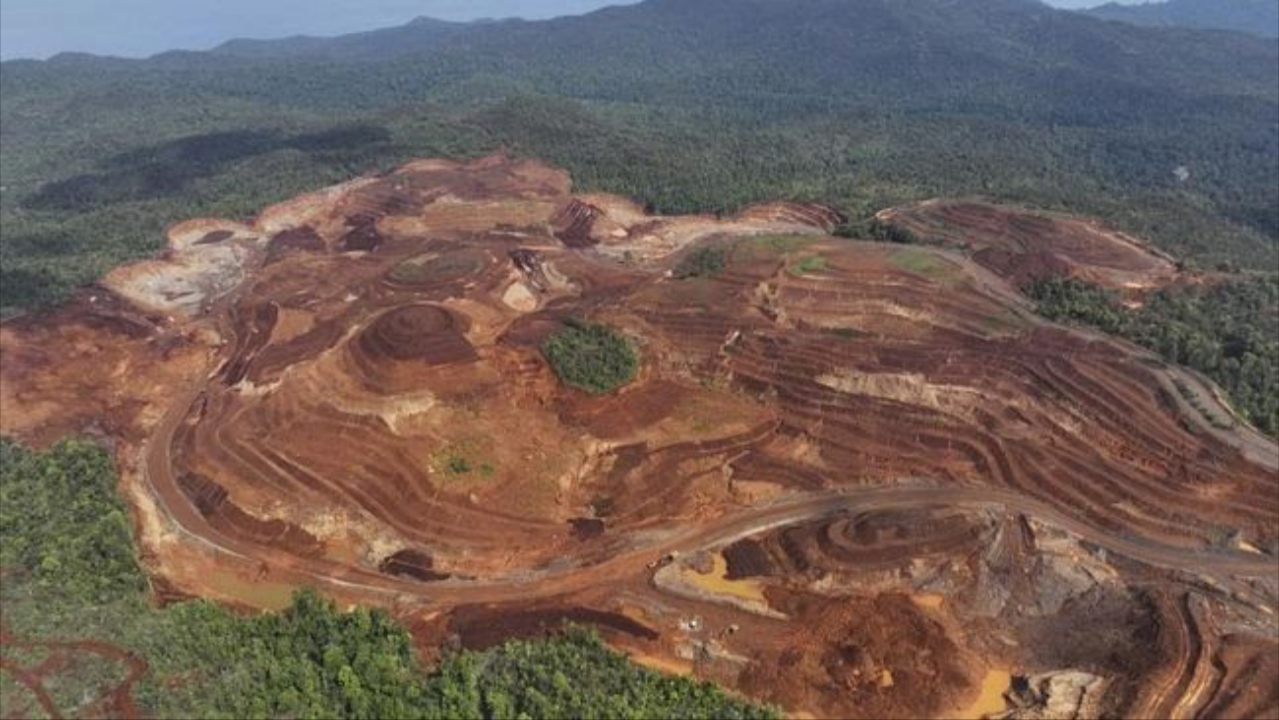
ASIATODAY.ID, NADI — Greenpeace Southeast Asia shook the international stage by bringing its #SaveRajaAmpat campaign to the United Nations Asia-Pacific Environment Ministers Forum in Nadi, Fiji, late last month. The group demanded fair, sustainable, and rights-based governance of nickel and other transition minerals.
As global demand for minerals such as nickel, cobalt, and lithium surges, Greenpeace warned that the energy transition must not become an excuse to sacrifice the environment and Indigenous rights.
Rayhan Dudayev, Senior Regional Campaign Strategist for Greenpeace Southeast Asia, emphasized that the energy transition is often used as a pretext to justify critical mineral extraction.

“In practice, massive nickel mining in Global South countries like Indonesia is destroying biodiversity hotspots such as Raja Ampat,” he said.
Greenpeace revealed that nickel mining in Raja Ampat has already caused deforestation, sedimentation, and pollution, devastating coral reefs and marine ecosystems. On land, habitats are being destroyed, while Indigenous Papuan communities face escalating marginalization.
On June 10, the Indonesian government announced it would revoke four of the five nickel mining permits in Raja Ampat. Yet no official revocation letters have been issued. Greenpeace is demanding permanent protection of the environment and Indigenous rights from the extractive industries.
At the official UN forum, Greenpeace Campaigner Dunxin Weng insisted that the United Nations Environment Assembly (UNEA) must adopt a binding resolution.
“Human rights and the principle of Free, Prior and Informed Consent (FPIC) for Indigenous peoples must be safeguarded. Vulnerable cultural areas and UNESCO World Heritage Sites must be declared off-limits to mining,” he urged.
UNESCO reports that 42 percent of Asia-Pacific World Heritage Sites overlap with oil, gas, or mineral concessions.
Beyond nickel, Greenpeace also called for UNEA to address the environmental impacts of wars and military invasions, highlighting the case of Gaza.
“Israel’s military assault on Gaza has unleashed unprecedented ecological destruction—soil degradation, water contamination, air pollution, and ecosystem collapse. All of this worsens the humanitarian suffering already inflicted by military operations,” said Dudayev.
The #SaveRajaAmpat campaign has become a global flashpoint, forcing Asia-Pacific governments to choose: protect the last paradise on Earth, or surrender it to nickel greed. (AT Network)
Follow Us at Google News and WA Channel