
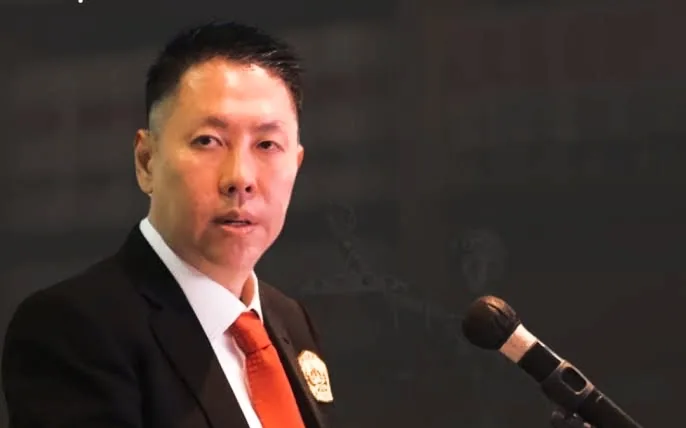
ASIATODAY.ID, JAKARTA — Energy and natural resources law expert Prof. Dr. Henry Indraguna, SH, MH has voiced strong support for the Indonesian government’s plan to implement a 10% ethanol-blended fuel (E10) program.
According to Prof. Henry, the initiative—led and orchestrated by the Ministry of Energy and Mineral Resources (ESDM)—is a strategic policy aimed at strengthening national energy independence while reducing reliance on imported fossil fuels.
“The E10 program is not only about energy innovation, but also about national sovereignty. Indonesia has vast potential to produce bioethanol from sugarcane and cassava, and now is the time to maximize that potential,” Prof. Henry said in Jakarta on Friday, October 17, 2025.
As a Senior Advisor to the Research and Development Agency (Balitbang) of the Golkar Party, Prof. Henry praised President Prabowo Subianto’s decision to approve the mandatory use of 10% ethanol-blended gasoline, calling it a cornerstone of Indonesia’s clean energy policy.
A Strategic Step in the Energy Sector
Earlier, Minister of Energy and Mineral Resources Bahlil Lahadalia announced that Indonesia would soon launch the E10 mandate, following the successful model of the biodiesel program using palm oil.
“Moving forward, we will push for E10 implementation. The program has been discussed with the President, and he has approved the 10% ethanol mandate. We will blend domestic gasoline with ethanol,” Bahlil said in Jakarta last week.
Bahlil, who also serves as Chairman of the Golkar Party, emphasized that the project will accelerate the downstream processing of domestic natural resources and align with Indonesia’s clean and sustainable energy transition agenda.
Support from Academia and Parliament
Prof. Henry, who also serves as a Professor at Sultan Agung Islamic University (Unissula), argued that the Minister’s decision deserves strong support from parliament, academia, the business sector, and the general public.
“The government must act swiftly because Indonesia currently imports around 60% of its domestic fuel needs,” he explained.
According to data from the Ministry of Energy and Mineral Resources, national fuel demand reaches 1.6 million barrels per day, while domestic production stands at only 600,000 barrels per day.
Representing Central Java Electoral District V (Surakarta, Boyolali, Klaten, Sukoharjo) under the Golkar Party, Prof. Henry expressed confidence that the bioethanol project would effectively reduce oil imports while promoting environmentally friendly energy utilization.
“This is the right momentum for Indonesia to shift from dependency on imports to utilizing cleaner, locally processed fuels,” he added.
A Multi-Layered Impact on the National Economy
Prof. Henry highlighted that the E10 policy would generate multiple economic benefits, from saving foreign exchange to empowering farmers.
“Beyond saving state foreign reserves from oil imports, this program will also open new economic opportunities in agriculture and bioenergy industries. Sugarcane and cassava farmers will play a vital role in the national energy supply chain,” he said.
He emphasized that the Golkar Party has consistently supported energy diversification through renewable resources, and the implementation of E10 marks a concrete step toward a clean and sustainable energy transition.
“Energy independence is the foundation of economic sovereignty. Through E10, we are building a greener, more stable, and people-centered energy future,” Prof. Henry asserted.
Towards Indonesia Emas 2045
Furthermore, Prof. Henry called on all stakeholders — including the automotive industry, research institutions, and the wider public — to support the government’s effort to ensure successful implementation of the E10 program.
As Deputy Chairman of the Indonesian Youth Movement (Bapera) and Head of the Legal Aid Institute (LBH) of DPP Bapera, he underlined that industrialization and downstream development are key to building a sovereign and sustainable economy.
“Golkar fully supports this initiative. It is a visionary policy aligned with the national development roadmap toward Indonesia Emas 2045,” he concluded. (AT Network)
Follow Us at Google News and WA Channel