
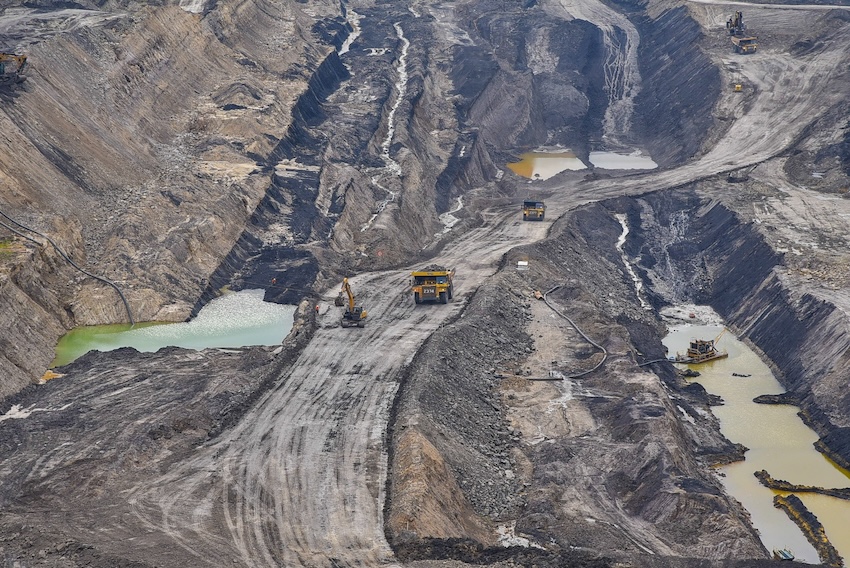
ASIATODAY.ID, JAKARTA — Indonesia is stepping up efforts to transform its vast coal resources into higher-value industrial products, with the National Research and Innovation Agency (BRIN) developing a pilot-scale activated carbon plant aimed at reducing import dependence and strengthening the country’s downstream mineral industry.
The pilot facility, designed to produce one metric ton of activated carbon per day, will utilize Indonesia’s abundant low-rank coal, converting it into a premium industrial material used in water treatment, food and beverage processing, pharmaceuticals, mining, and gas purification.
The initiative aligns with Indonesia’s broader downstream industrialization strategy, which seeks to generate greater economic value from the country’s natural resources through domestic processing and advanced manufacturing.
According to BRIN senior researcher Ika Monika, Indonesia’s large reserves of low-grade coal present a significant opportunity to develop high-value industrial products rather than relying solely on conventional coal exports.
“The development of pilot-scale production technology is expected to accelerate commercialization, increase domestic value addition, and support import substitution,” she said during BRIN’s ninth Research Dissemination Webinar quoted on June 29.
Indonesia continues to rely heavily on imported activated carbon despite growing domestic demand across multiple industries. Developing local production capacity is expected to strengthen supply-chain resilience, reduce import dependence, and create new opportunities for value-added manufacturing.
BRIN said the production process combines carbonization (pyrolysis) with physical or chemical activation. Maintaining precise control over reactor temperature, residence time, and activating-agent flow is critical to achieving consistent product quality, as even small operational deviations can significantly affect adsorption performance and carbon structure.
Pilot-scale testing has demonstrated that the coal-based activated carbon meets key industrial quality requirements, including high specific surface area based on Brunauer-Emmett-Teller (BET) analysis, iodine values compliant with Indonesia’s National Standard (SNI), and low ash content suitable for industrial adsorption applications.
The agency expects the pilot plant to serve as a foundation for commercial-scale production through partnerships with domestic coal mining companies and chemical manufacturers.
The project also reflects Indonesia’s ongoing efforts to diversify the utilization of coal beyond its traditional role as an energy source. As global demand for activated carbon continues to grow—driven by tighter environmental regulations, expanding water treatment infrastructure, and increasing industrial filtration requirements—the country sees an opportunity to develop a competitive domestic manufacturing base for advanced carbon materials.
If successfully commercialized, BRIN’s technology could represent another milestone in Indonesia’s downstream industrial transformation, enabling the country to convert low-value coal resources into high-value industrial products while enhancing the competitiveness of its manufacturing sector and reducing reliance on imported specialty materials. (AT Network)
Follow Us at Google News, WA Channel, and LinkedIn