
ASIATODAY.ID, JAKARTA – The Nickel Institute, the global association representing the world’s leading primary nickel producers, is advancing its commitment to sustainability through its scientific division, NiPERA.
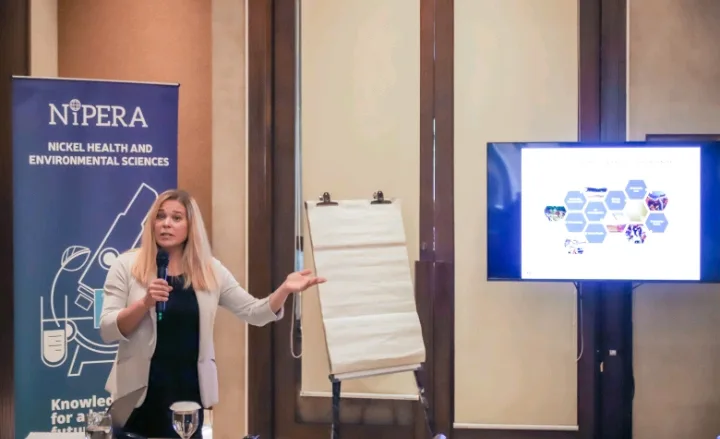
On 30 September 2025 in Jakarta, NiPERA hosted the workshop “Designing Site-Specific Community and Ecological Risk Assessment Frameworks,” bringing together around 25 representatives from industry, government, academia, and associations.
The workshop comes at a time when there is an unprecedented global demand for nickel, especially for electric vehicle batteries and stainless-steel use. This demand creates significant growth opportunities and heightens the challenge of ensuring sustainable practices that protect the environment and human health. NiPERA underscores the critical role of regional- and site-specific risk assessments in aligning industrial operations with each location’s unique social, ecological, and geographical conditions.
Dr. Emily Garman, Senior Environmental Toxicologist at NiPERA, said: “NiPERA is committed to advancing global nickel sustainability and continues encouraging collaboration among industry, government, academia, and associations to promote responsible mining practices. Our efforts focus on two key priorities: the environment and community health, as both are critical to long-term success. By engaging with Indonesian and global experts from diverse backgrounds, we aim to develop a framework that the nickel industry can readily apply at national and regional levels.”
Sustainability takes on added significance in light of the strategic roles of Indonesia and the Philippines within the global nickel industry. The United States Geological Survey (USGS) notes that they are the world’s top 2 producers by volume. In 2024, Indonesia produced 2.2 million tons and the Philippines 330,000 tons. Both nations have a critical role to serve as models for responsible and sustainable mining practices.
To capitalize on this momentum, NiPERA has launched a cross-sector collaboration bringing together stakeholders from industry, government, academia, and associations. The initiative aims to establish a risk assessment framework that helps companies implement best practices while strengthening their Environmental, Social, and Governance (ESG) performance.
This initiative also creates space for academics and researchers to contribute data, innovation, and independent insights, ensuring the resulting methods are evidence-based and effective.
Dr. Anindrya Nastiti, Senior Lecturer in the Faculty of Civil and Environmental Engineering, Institut Teknologi Bandung emphasized: “The involvement of academics in the NiPERA workshop brings independent data and analysis that broaden perspectives. As a result, the risk assessment framework becomes more scientifically sound, grounded in evidence, and better equipped to guide effective decision-making in the nickel industry. This is to ensure that nickel truly supports a just and sustainable transition.”
In addition to academic contributions, NiPERA considers industry involvement a vital component in developing the risk assessment framework. This engagement enables companies to align their operations with global sustainability standards while ensuring they remain practical and relevant to real-world conditions while addressing those unique to Indonesia and the Philippines.
Tonny H. Gultom, Chairman of the Steering Committee of the Indonesian Nickel Industry, ESG Standards Development Team, Association of Indonesian Mining Professionals (PERHAPI) emphasized: “Nickel industry engagement in shaping this risk assessment framework is essential to ensure operations align with international sustainability standards while remaining responsive to local realities. The initiative enables companies to go beyond compliance, enhancing their competitiveness through environmentally and socially responsible practices.”
Through the workshop, NiPERA facilitated cross-sector collaboration to design a risk assessment framework for adoption in Indonesia and the Philippines that is consistent and complements existing industry risk assessments in these countries. This inclusive approach represents the first step in identifying and prioritizing ecological and community risks to protect.
This initiative also ensures stakeholders collectively advance a nickel industry that protects the environment and human health while remaining responsive to global market demands.
In the future, this initiative can be used to develop a framework that maps potential exposures affecting human health and the environment, providing regional guidance for Indonesian and Philippine nickel producers to demonstrate safe, responsible extraction in ESG and environmental reporting. (AT Network)
Follow Us at Google News and WA Channel